What We Do
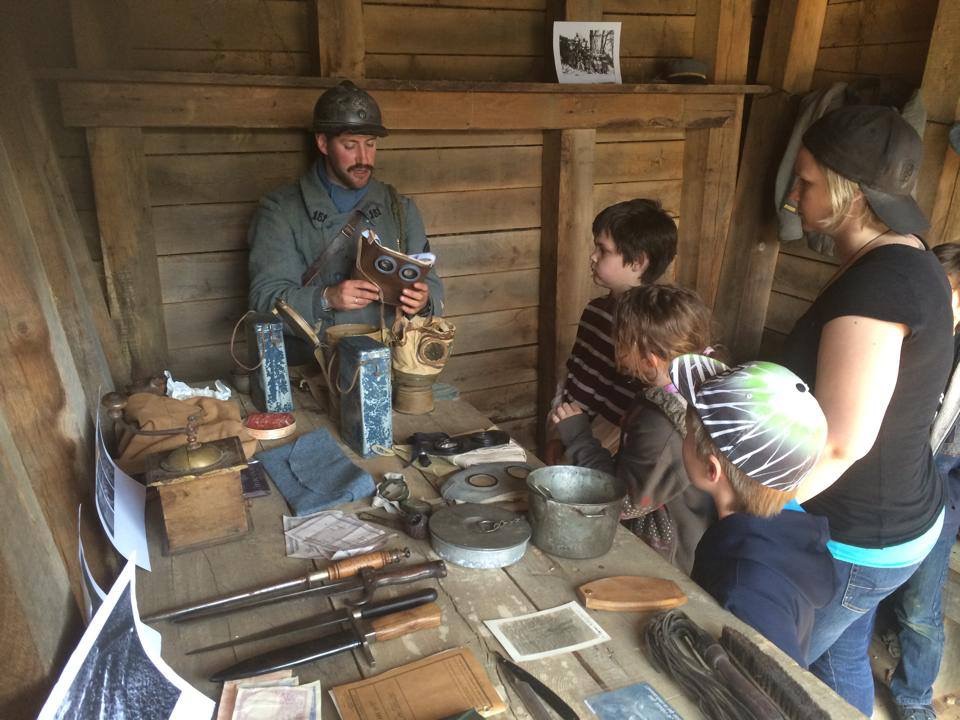
Members of the 151
st R.I. participate in both public living-history events and private immersive reenactments mainly throughout the Mid-Atlantic states.
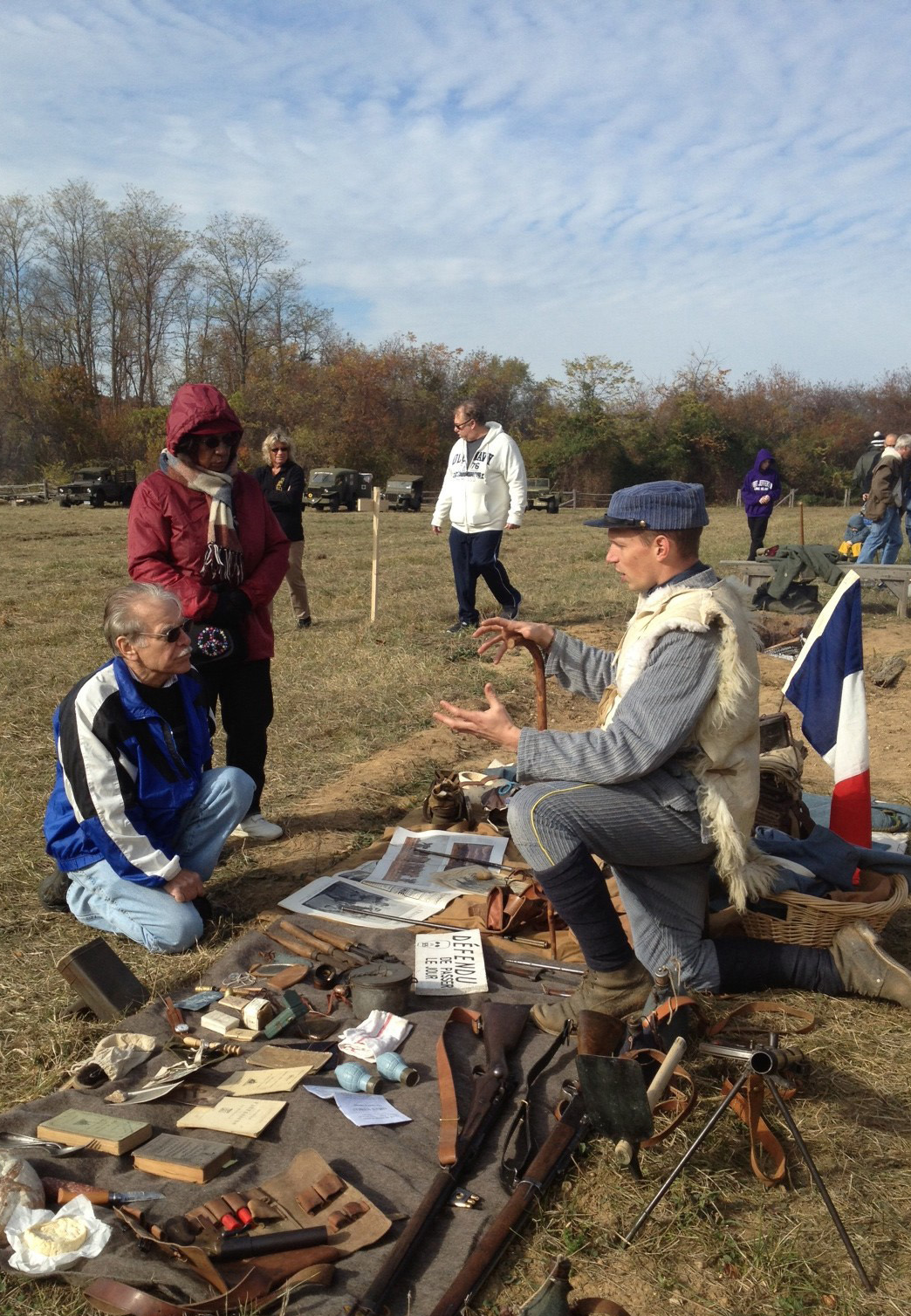 Public Living-Histories
Public living histories present us with the opportunity to educate a general audience about the war and the men who fought in it. Teaching others is essential to preserving the memory of the combatants. Typical activities at these events include:
Displays: material culture displays, including weapons, uniforms, equipment, and soldier’s personal items, many of which are original to the war. Public events offer a chance for unit members to display the full range of their kits, including many smaller, unique items that are only suitable to display outside of reenactments.
Discussions: leading talks on the weaponry, gear and daily life of the French soldier and life in the trenches. These can be either lectures or simple casual conversations driven by the audience.
Demonstrations: tactical demonstrations on a squad or platoon-level gives the public insight how the combatants were trained and how the fighting was actually conducted on a small-scale. This includes foot-and-arms drills, bayonet scrimmaging, and advanced combat exercises.
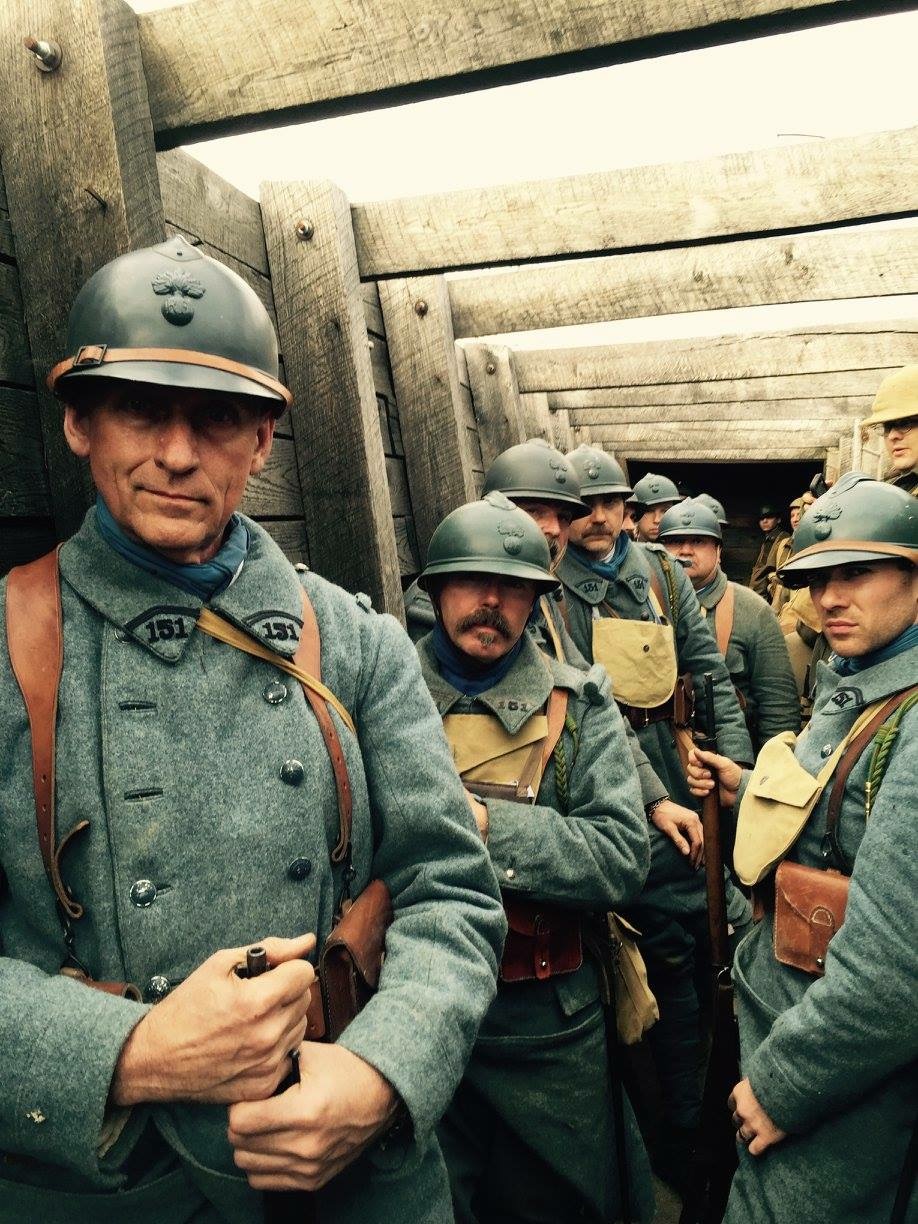 "Immersive" Reenactments
Reenactments make up the other side of our hobby. These are normally not open to the public and instead offer the reenactor the chance to truly immerse himself in the period. Most of our reenactments take place at a permanent battlefield site just outside Newville, Pennsylvania. The land is owned by the GWA parent organization and is replete with trench networks, underground bunkers, and a No-Man’s-Land filled with shell-holes and barbed-wire entanglements. Our reenactments last for two or three consecutive days -- from Friday afternoon to Sunday morning. The aim is of total immersion for the participants involved, in order to achieve a genuine feel of life in the trenches. Together with the other Allied and Central Powers units, we attempt to recreate an average sector on the Western Front in 1917-18. At Newville, we literally eat what they ate and sleep as slept. Typical activities at these events include:
Combat operations: these are conducted on squad, platoon, company and battalion levels. This includes launching large-scale attacks and smaller raids on the enemy positions, and defending our own positions from enemy forays. We also carry out reconnaissance and combat patrols. All of these operations occur both during the day and especially at night.
Work fatigues: most of the infantryman’s day was spent not fighting but laboring. Every riflemen or grenadier was also a navvy. As such, a good portion of our time up at the front line is spent digging entrenchments, revetting trench walls, filling sand-bags, stringing up barbed-wire in No-Man’s-Land (at night, of course), or carrying out any number of the small chores necessary for supporting a unit in the trenches.
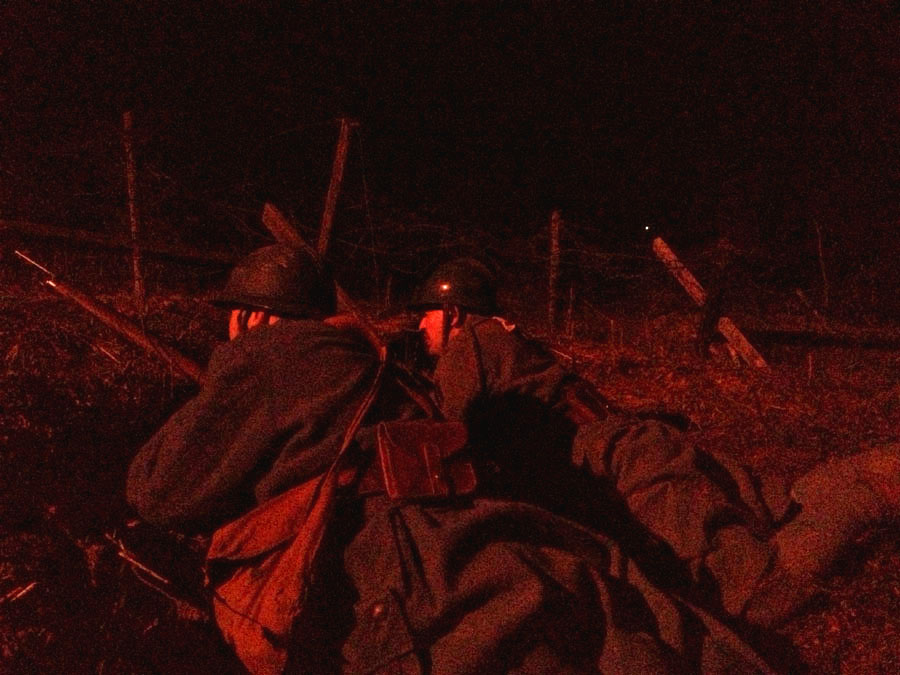 Duties and posts: vigilance is key to security in the trenches and we must always be on alert for enemy activity. Both at night and during the day, men are assigned to look-out and guard duty in the trenches, and posting to advanced listening posts in No-Man’s-Land at night offers its own nerve-wracking experience of being on high-alert for enemy patrols and raiding parties.
Training exercises: this encompasses the basic foot-and-arms drill that every soldier would have learned, as well as advanced training in combat tactics, weapons handling, entrenching, and more. The information gained from these sessions can then be directly applied to our operations that take place at our reenactments.
Living history: this includes any number of period-correct and context-appropriate activities. Cooking our meals, distributing mail (properly post-marked and stamped), holding pay call, going on short marches with the full-kit, playing soccer matches, singing songs or playing cards in our bunker, and even operating a military co-operative (like today's military PX) that sells food and accurately reproduced small goods for unit members.
Duties and posts: vigilance is key to security in the trenches and we must always be on alert for enemy activity. Both at night and during the day, men are assigned to look-out and guard duty in the trenches, and posting to advanced listening posts in No-Man’s-Land at night offers its own nerve-wracking experience of being on high-alert for enemy patrols and raiding parties.
Training exercises: this encompasses the basic foot-and-arms drill that every soldier would have learned, as well as advanced training in combat tactics, weapons handling, entrenching, and more. The information gained from these sessions can then be directly applied to our operations that take place at our reenactments.
Living history: this includes any number of period-correct and context-appropriate activities. Cooking our meals, distributing mail (properly post-marked and stamped), holding pay call, going on short marches with the full-kit, playing soccer matches, singing songs or playing cards in our bunker, and even operating a military co-operative (like today's military PX) that sells food and accurately reproduced small goods for unit members.
For a window into our events, please see the Recreation Photos page in our Images section.
>>>Be sure to check out the How To Join page next.



